Strategic Publications
Recruitment & Research Communication Systems
Client: Griffith University
Role: Publication Design, Art Direction & Production
Formats: 48-page Study Guide (Print & Digital) + Research Survey Report
Role: Publication Design, Art Direction & Production
Formats: 48-page Study Guide (Print & Digital) + Research Survey Report
Overview
This collection showcases two large-scale institutional publications developed for Griffith University: the 2025 Postgraduate Study Guide and the inaugural Climate Action Survey report.
Together, these projects demonstrate my ability to translate complex academic, research and policy content into structured, accessible visual systems — balancing recruitment objectives with research-led impact communication.
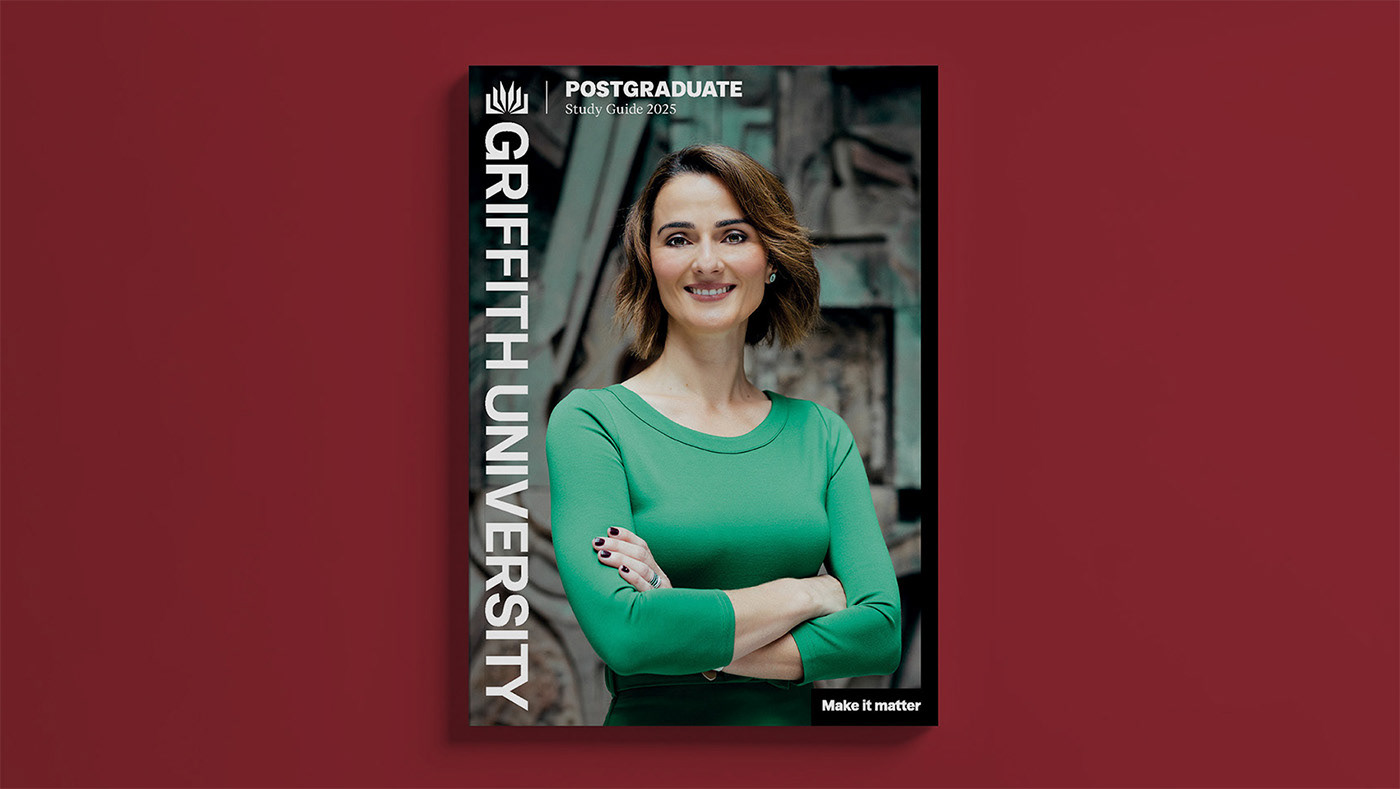
Postgraduate Study Guide 2025
48 pages | 20,000 copies printed
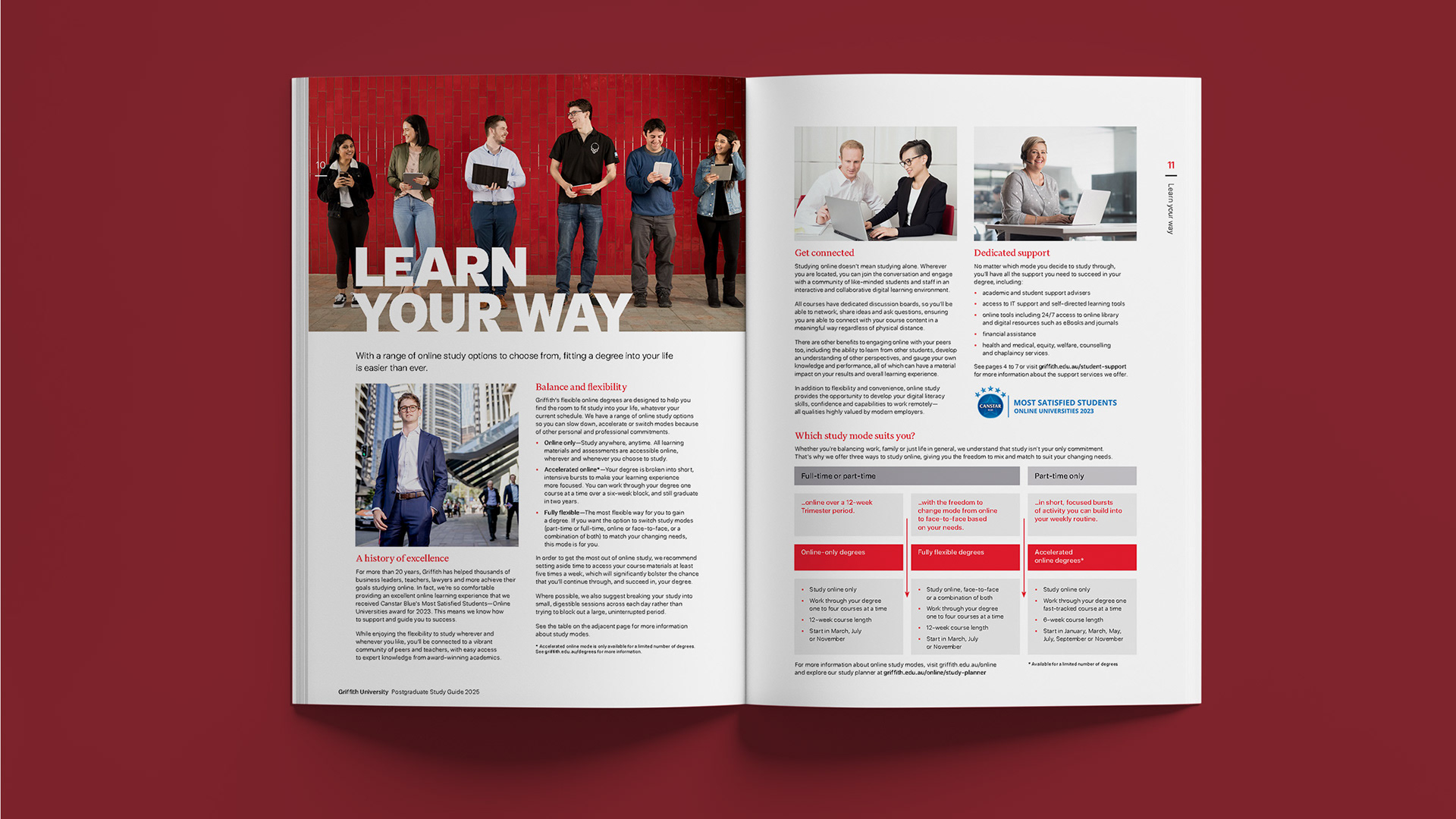
The Postgraduate Study Guide is the second-largest annual publication produced by Griffith University, distributed at major recruitment events including campus Open Day and TSXPO.
Targeted at mature students — professionals seeking career progression, career changers and graduates pursuing advanced study — the guide functions as both an informational resource and a strategic recruitment tool.
Context
In 2025, Griffith’s Undergraduate Study Guide underwent a significant design refresh. I was responsible for translating the new magazine-inspired art direction into the Postgraduate Guide while maintaining clarity for a distinct audience.
This required:
• Adapting an evolving design system across publications
• Interpreting new grid logic and visual hierarchy
• Preserving institutional consistency
Design Approach
The refreshed direction introduced:
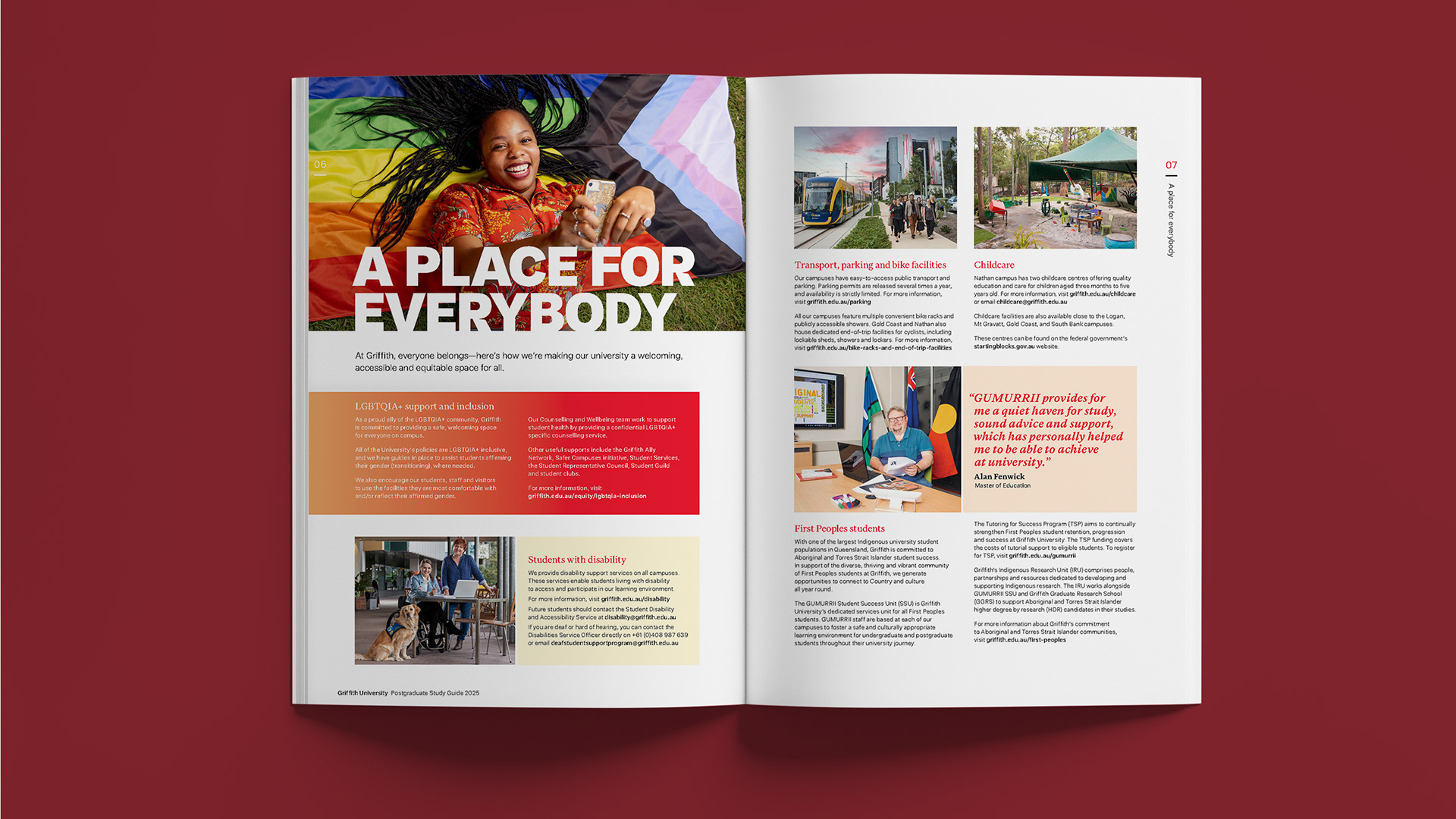
• Prominent editorial-style titles
• Hero imagery
• Modular and flexible grid systems
• Elevated typographic hierarchy
I worked in close collaboration with copywriter Mitch Knox to ensure content clarity and flow across:
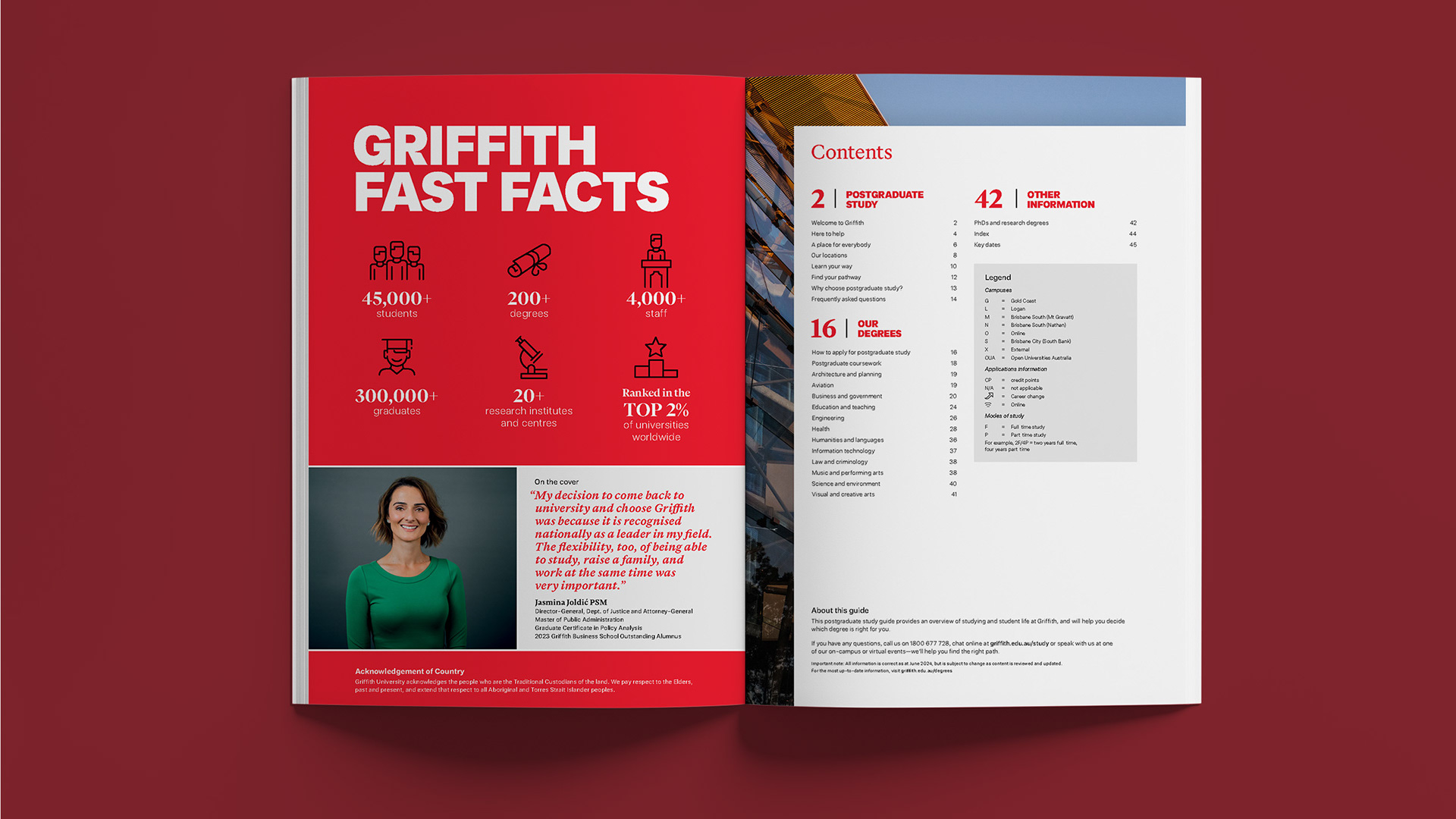
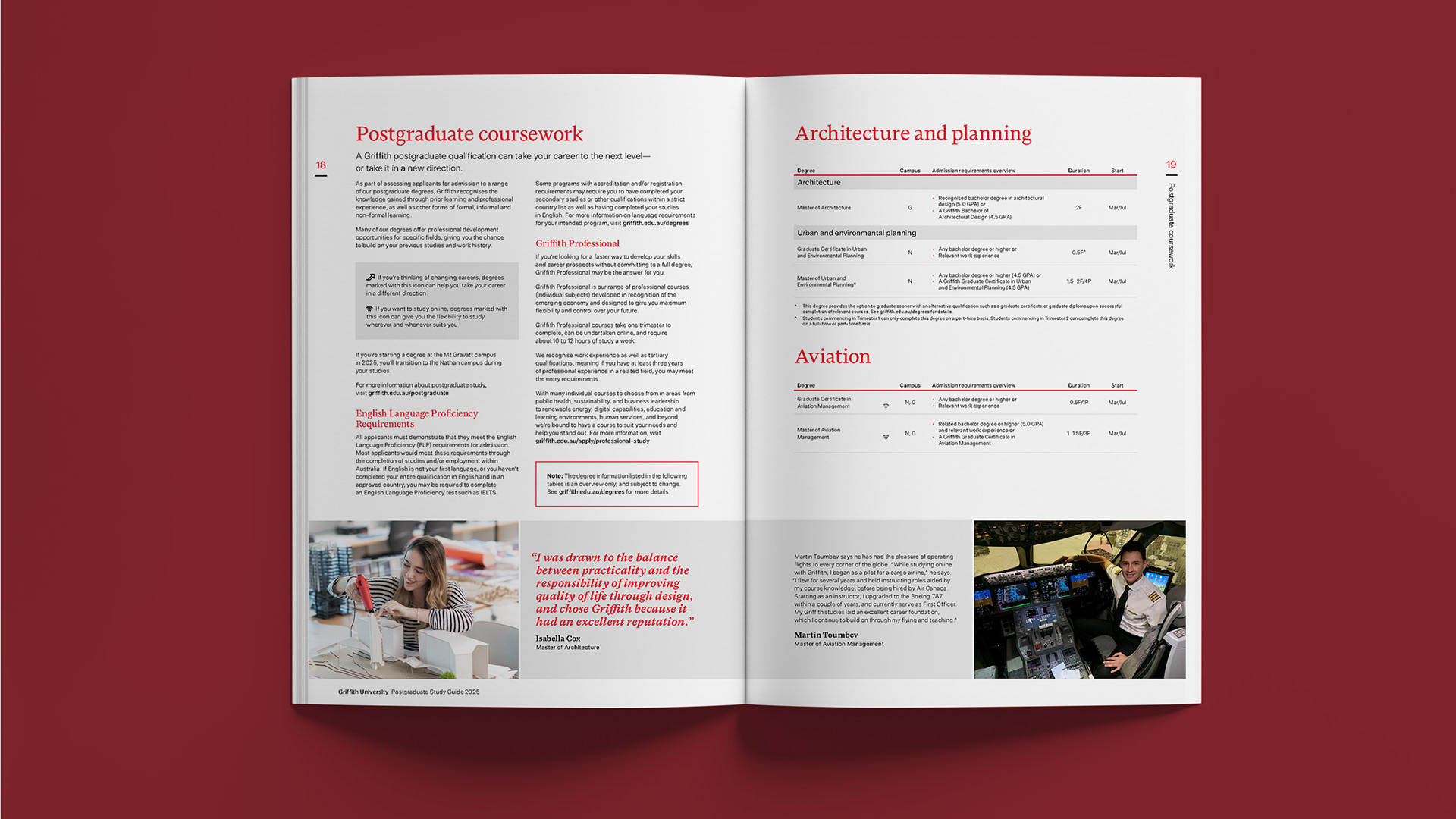
• Degree tables
• Complex entry requirement matrices
• Quotes and testimonial spreads
• Structured contents and indexing
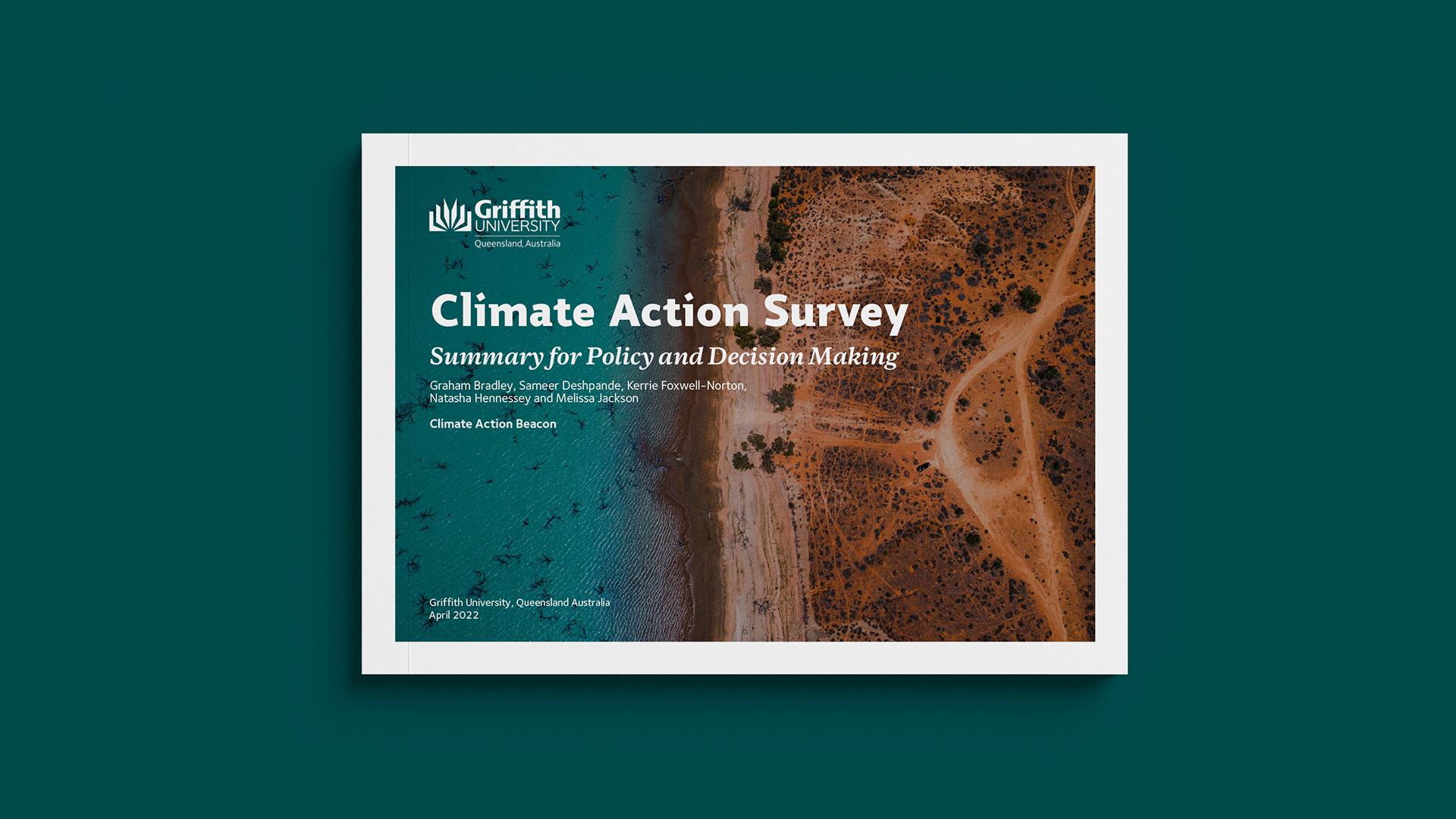
• Cover design
Beyond layout design, I managed finished artwork preparation and accompanied print production to review colour accuracy and material quality.
Outcome
• 20,000 printed copies
• Distributed at flagship recruitment events
• Accessible PDF published online for lead generation
• Supports Griffith’s primary postgraduate recruitment strategy
This project demonstrates large-scale publication management, cross-publication design adaptation and institutional-level production oversight.
Climate Action Survey
Research Publication | Digital Distribution
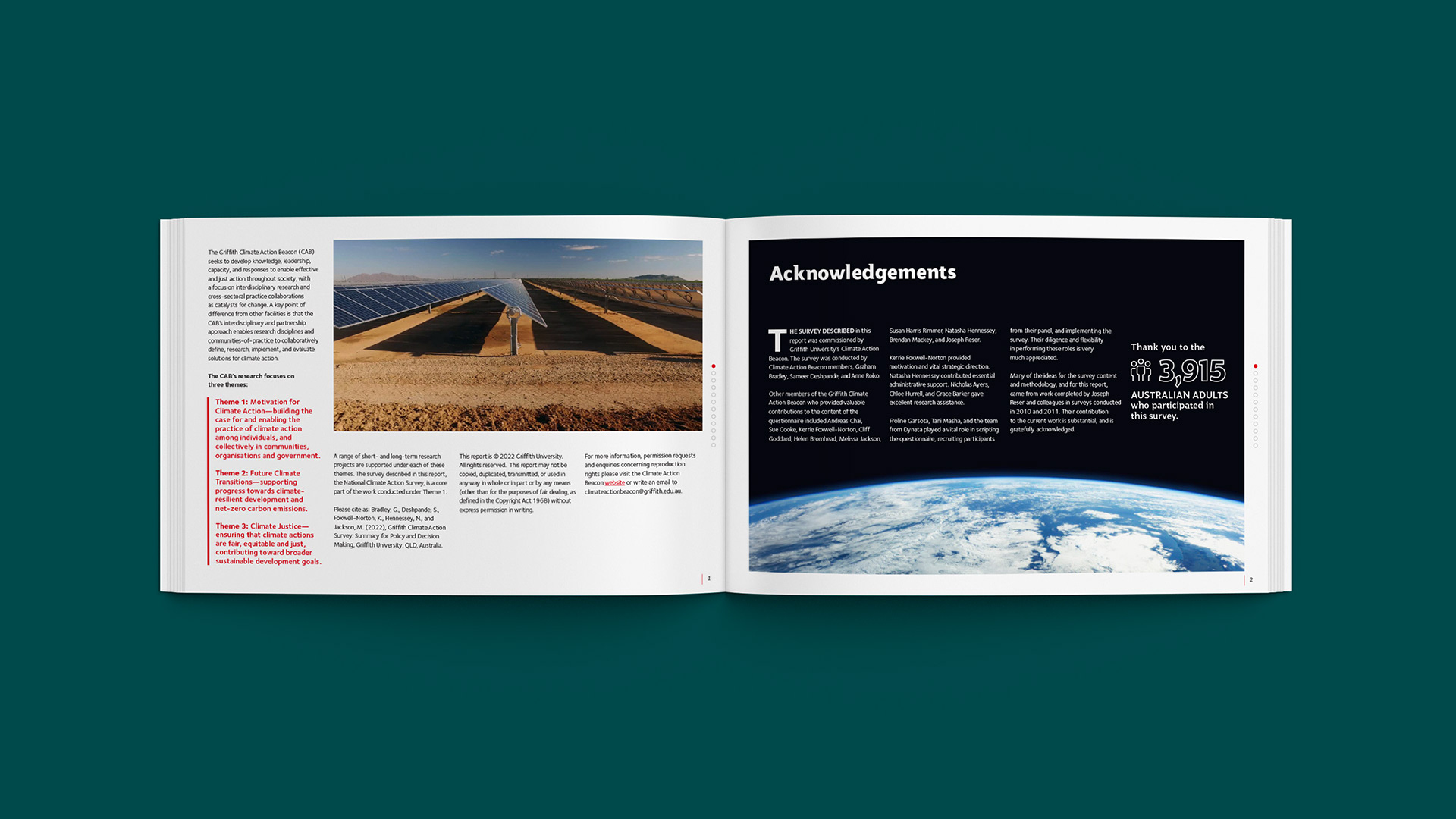
The Climate Action Survey was the first of a planned five-year national research series conducted by Griffith’s Climate Action Beacon team.
The survey mapped Australians’ actions, attitudes and emotions regarding climate change, with findings released shortly before national elections — contributing to public discourse during a pivotal political moment.
The survey mapped Australians’ actions, attitudes and emotions regarding climate change, with findings released shortly before national elections — contributing to public discourse during a pivotal political moment.
Context
This project required close collaboration with:
• Academic researchers
• Griffith marketing team
• Communications stakeholders
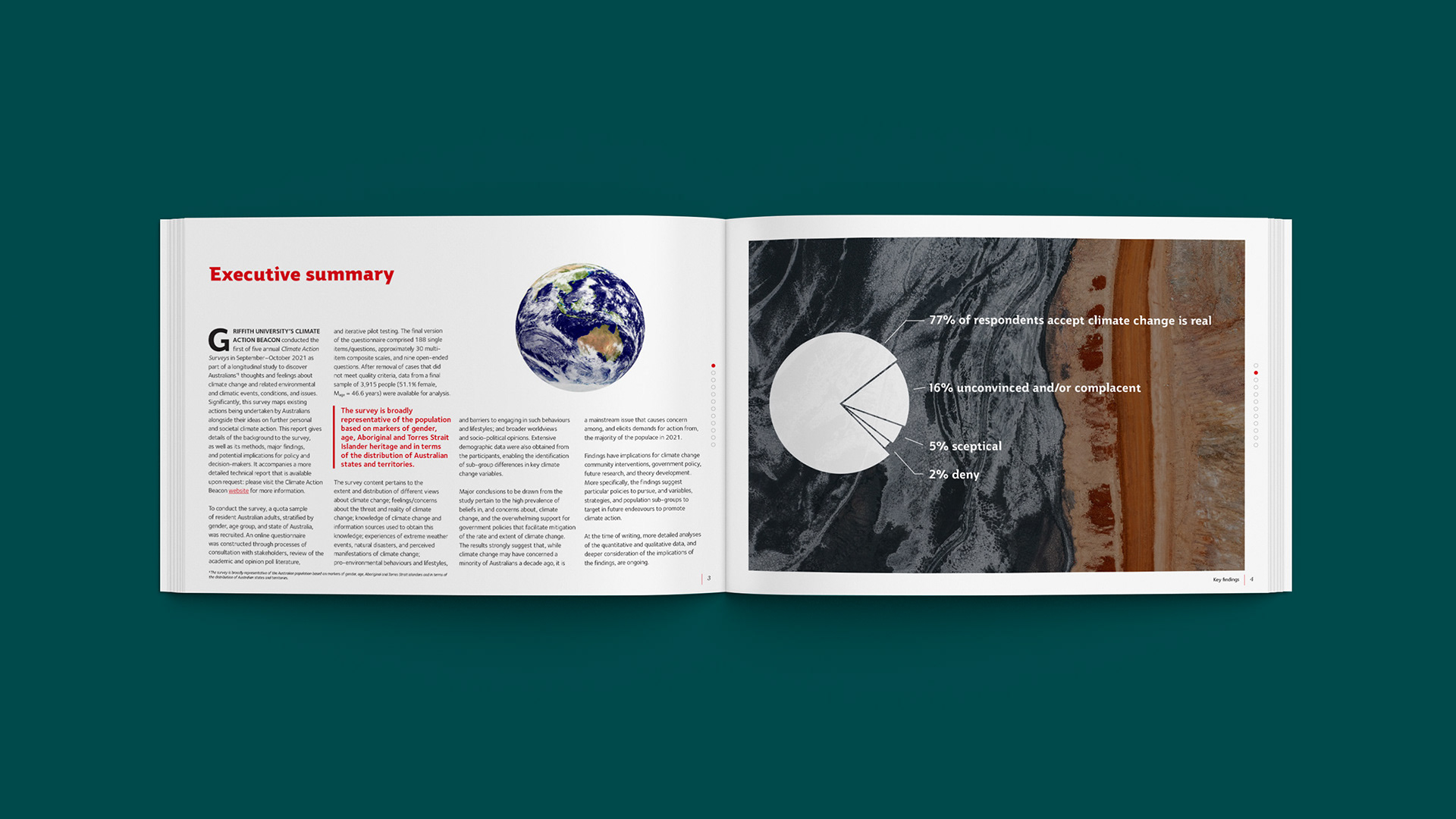
My role involved distilling complex data into accessible information design while maintaining research credibility.
Design Approach
Because this was the inaugural survey, I designed the publication as a reusable template system to ensure visual continuity across future annual releases.
Key considerations included:
• Clear data visualisation hierarchy
• Informational graphics translating research findings
• Structured narrative flow
• Digital-first readability
• Social media asset rollout highlighting key findings
The report aligned firmly with Griffith’s research-led mission to influence industry, policymakers and public understanding around sustainability.
Outcome
• Published digitally on Griffith’s website
• Used to communicate research findings to the public and policy audiences
• Established a scalable publication framework for future survey editions
This project demonstrates research communication, template system design and the ability to translate academic insight into accessible public-facing material.
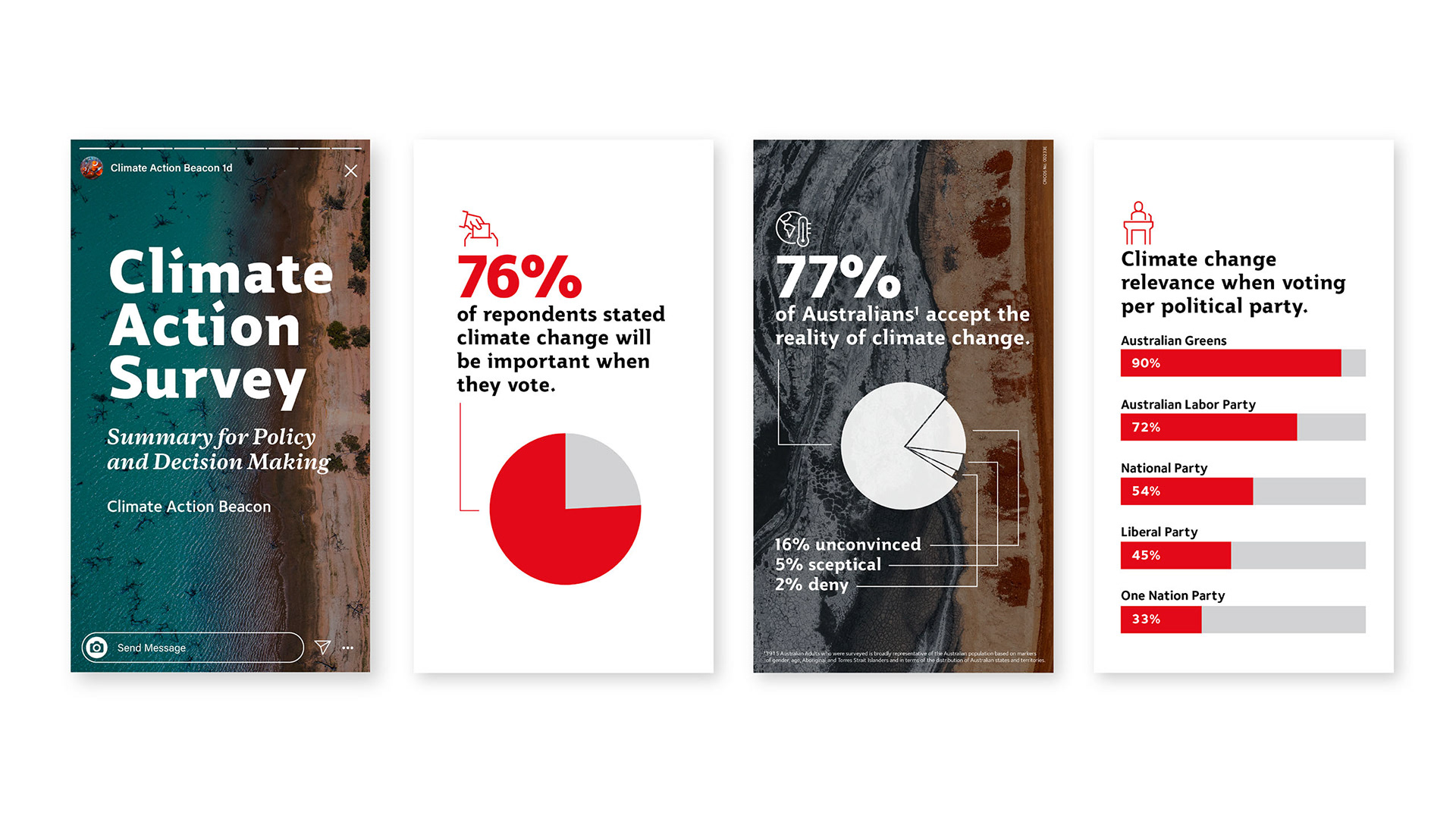
Social media story adapted from the report.

Collection Impact
Together, these publications reflect two complementary pillars of university communication:
• Recruitment-driven storytelling
• Research-led societal impact
They demonstrate:
• Systems-based publication design
• Institutional brand translation
• Complex typographic handling
• Data visualisation clarity
• Multi-stakeholder collaboration
• Print and digital production maturity